
Trick or Treat? Reese’s Pumpkin Packaging Offers a Lesson in Advertising Claims
by: Mindy Abern
Hershey recently won a lawsuit over its Reese’s Peanut Butter Pumpkins packaging. But just in time for Halloween, the company made a notable change to that same packaging, offering a timely reminder that even a successful legal defense doesn't necessarily eliminate advertising risk.
The Case: A Not-So-Spooky Surprise
Two Florida consumers sued Hershey after purchasing Reese’s Peanut Butter Pumpkins featuring jack-o’-lantern faces on the packaging, only to discover that the actual chocolates were plain pumpkin shapes without the carved faces. The plaintiffs alleged that the packaging was misleading because they expected the candy to look like the image on the package. In September 2026, a federal court dismissed the lawsuit, finding that the plaintiffs had failed to establish a legally recognizable injury. The court concluded that their alleged harm amounted to subjective disappointment rather than an actual economic loss. Importantly, the court did not decide whether the packaging itself was misleading. The decision turned on standing, leaving the underlying advertising claims unresolved.
A New Halloween Look
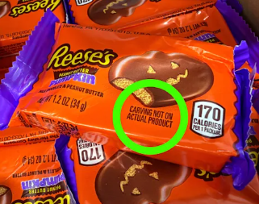
Despite the favorable ruling, Hershey updated its packaging this season to include an explicit disclosure: “Carving Not on Actual Product.” The new language directly addresses the alleged consumer confusion at the heart of the lawsuit. Hershey has not confirmed whether the change was prompted by the litigation, but the revised language illustrates an important distinction in advertising compliance: a disclosure should clearly communicate what consumers can expect from the actual product. The new disclosure directly addresses the potential for consumer confusion by clearly distinguishing the product depicted on the packaging from what consumers will find inside the package.
Takeaways for Advertisers
We’ve said it before, and we’ll say it again … product imagery is an advertising claim. Even seemingly minor differences between a product's packaging and its actual appearance can invite consumer challenges. A few things to keep in mind:
Images matter. Packaging should accurately reflect the product, particularly when depicting distinctive features, colors, toppings, or decorations.
Be direct. Clear, specific disclosures are generally more effective than vague qualifiers such as “Serving Suggestion” or “Decorating Suggestion.”
Placement matters. Disclosures should be prominent and positioned near the images or claims they qualify.
A legal win isn't always the end of the story. A dismissal based on standing does not necessarily establish that the underlying advertising is compliant.
Bottom line: When it comes to product packaging, the best way to avoid a Halloween scare is to make sure consumers know exactly what's inside the wrapper.
Originally published by InfoLawGroup LLP. If you would like to receive regular emails from us, in which we share updates and our take on current legal news, please subscribe to InfoLawGroup’s Insights HERE. This summary does not constitute legal advice.